Central Florida properties face intense biological pressure due to prolonged humidity, high ambient temperatures, and regular precipitation cycles. Invasive Aedes albopictus and Culex quinquefasciatus exploit low-lying…
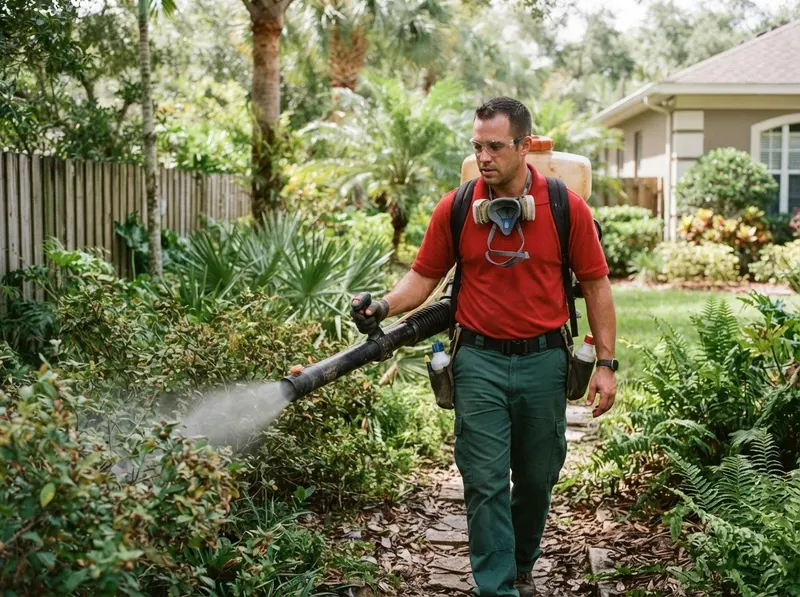
Central Florida properties face intense biological pressure due to prolonged humidity, high ambient temperatures, and regular precipitation cycles. Invasive Aedes albopictus and Culex quinquefasciatus exploit low-lying drainage zones, dense ornamental shrubbery, and shaded tree canopies common to neighborhoods such as Baldwin Park, Lake Nona, and Dr. Phillips. Sub-tropical mosquito management requires targeted liquid microencapsulated adulticides applied to the underside of broadleaf foliage where mosquitoes rest during peak thermal daylight hours, combined with microclimate larvicides deployed directly into non-draining organic reservoirs.
Residential lots adjoining retention ponds or natural waterways in College Park, Thornton Park, and Delaney Park encounter unique migration corridors. If a lot contains zero standing water but borders lake boundaries near Lake Eola Park or heavy natural vegetation near Harry P. Leu Gardens, adulticide residual barriers along property fences and boundary vegetation are prioritized. Conversely, if an Audubon Park or MetroWest property features artificial bromeliads, clogged flat-roof scuppers, or French drains, deploying Bacillus thuringiensis israelensis (BTI) bacterial larvicides disrupts larval development within 24 to 48 hours without affecting non-target beneficial species.
Effective defense requires an honest assessment of trade-offs regarding barrier coverage. Continuous broadcast misting systems offer localized relief but demand recurring mechanical fluid maintenance and risk drift into flowering pollinator beds; manual targeted backpack applications concentrate solely on harborage zones beneath porch eaves, dense palmetto clusters, and perimeter hedges. In Rosemont and UCF-area parcels with heavy tree canopies, regular 21-to-30-day retreatments during peak summer rainfall sustain the chemical barrier integrity that natural tropical deluges break down. Properties requiring initial remediation start at a $250 minimum assessment and treatment baseline.
Every job gets a firm, written price after a free on-site visit.
Tell us about your mosquito reduction service job in Orlando and we'll send a clear, written quote, usually the same day.
 SureNest Pest Control