Commercial kitchen pest defense requires strict biochemical selection to control infestations without contaminating prep tables or violating Chapter 500 of the Florida Statutes. High ambient humidity along the…
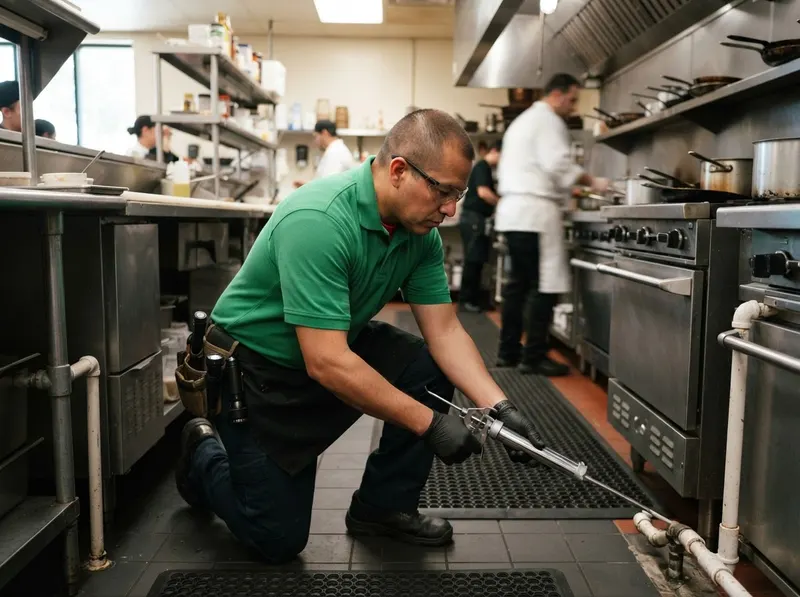
Commercial kitchen pest defense requires strict biochemical selection to control infestations without contaminating prep tables or violating Chapter 500 of the Florida Statutes. High ambient humidity along the Interstate 4 corridor and hot grease vapor behind cooking equipment create microclimates where Blattella germanica completes its 60-day lifecycle in under 35 days. Standard broadcast pesticide spraying is prohibited around exposed stainless steel food contact surfaces. Instead, perimeter defense deploys non-repellent insect growth regulators (IGRs) and localized matrix baits placed inside hollow equipment legs, junction boxes, and compressor compartments. Drain systems in high-volume food service spaces, such as restaurant corridors along Sand Lake Road in Dr. Phillips or brewery taprooms in Audubon Park, face persistent phorid and drain fly pressure, which requires bacterial foam digestion to strip the biofilm lining floor waste lines rather than masking odors with temporary chemical flushes.
Selecting treatment scope involves balancing disruption against regulatory compliance. A targeted crack-and-crevice baiting protocol allows standard operations to resume within two hours, making it optimal for active dining establishments in Thornton Park and College Park facing early-stage harborage. If deep grease accumulation beneath modular ranges has anchored an entrenched German roach colony, the facility requires structural clearing: pulling equipment from perimeter walls, applying targeted dry-flowable micro-encapsulations, and mechanically sealing floor-to-wall utility gaps with silicone-copper mesh. This advanced intervention trade-off requires a four-to-six-hour kitchen shutdown, which is executed overnight to prevent downtime during active lunch and dinner shifts.
Local architectural layouts across Orange County dictate vector intrusion points. Historic brick structures in downtown Orlando and older converted commercial bungalows in Delaney Park often have unsealed plumbing penetrations through raised foundations, permitting roof rats to enter drop ceilings from nearby oak canopies. In contrast, slab-on-grade commercial spaces in Lake Nona and modern retail developments in Baldwin Park feature long exterior conduits that channel rodents through back-dock delivery zones. Effective defense demands continuous physical barrier maintenance: replacing damaged door sweeps, sealing penetrations with 16-gauge stainless wire mesh, and placing tamper-resistant exterior bait stations along exterior waste pads.
Every job gets a firm, written price after a free on-site visit.
Tell us about your commercial kitchen pest defense job in Orlando and we'll send a clear, written quote, usually the same day.
 SureNest Pest Control